

The origin of LIFE IN PATAGONIA: a way of inhabiting the territories

Text written by Mauricio Kusanovic: founder of Life In Patonia.
I grew up in the countryside of Patagonia. From Tierra del Fuego to Isla Riesco, and later in Puerto Natales, my childhood was marked by ranch life: horses, sheep, cattle drives, harsh winters, and a daily connection with nature. My father was a rancher, my mother a teacher, and for us, that way of life was normal. Living in harmony with the land wasn't a concept; it was simply the natural way of being in the world.

Over the years, through studying and exploring other places, I came to understand that this experience wasn't universal. For many, nature is exceptional and distant. And even those who seek to connect with it—by buying land or seeking out more rural areas—often fail to achieve a harmonious relationship, more due to a lack of knowledge than a lack of intention.
My professional life has been dedicated to tourism, and especially to Reserva Las Torres . Together with my family, we have driven a project for over three decades that has evolved from the traditional cattle ranching of the 1970s and 90s to a model where sustainable tourism and conservation have become fundamental pillars. I also had the opportunity to lead the Las Torres Conservancy for more than ten years. (Former NGO Ama Torres del Paine) from where we develop reforestation programs, research and active management within the park.
That experience taught me something that became evident over time: well-managed tourism is one of the best conservation tools that exist.


But as that was progressing, a phenomenon began to emerge in Chile that caught my attention: the subdivision of agricultural land and the explosion of parcel projects. The country was filled with conflicting opinions, many of them questioning this model. And while I personally find it hard to believe that it could be wrong for people to want to get closer to nature, I also understood that the key lies in how it's done: without management, without clear rules, and without a vision, the projects fail for both the landowners and the land.


That's where the question that shaped all of this originated:
Why can't rural living, sustainable tourism, and conservation coexist in the same territory?
The IUCN —the world's leading authority on conservation—clearly points out that there are multiple conservation models , ranging from the strictest to those that allow for sustainable productive activities. Regenerative livestock farming, for example, can improve soils and restore wildlife if managed according to sound technical principles. The same applies to responsible tourism or well-structured rural residential projects.
So, if all those worlds can coexist, why not design projects that integrate them from the start?
That was the seed of Life in Patagonia .
We decided to create a model where:
Regenerative ranches and livestock farming maintain their productive role.
People can live in the countryside without degrading it, under clear rules of design and conservation.
Tourism brings economic dynamism and finances part of the conservation.
Conservation ceases to be an abstract ideal and becomes concrete management.
And when management is good—when there is a coherent vision— territories are strengthened . Activities don't compete with each other: they reinforce one another.
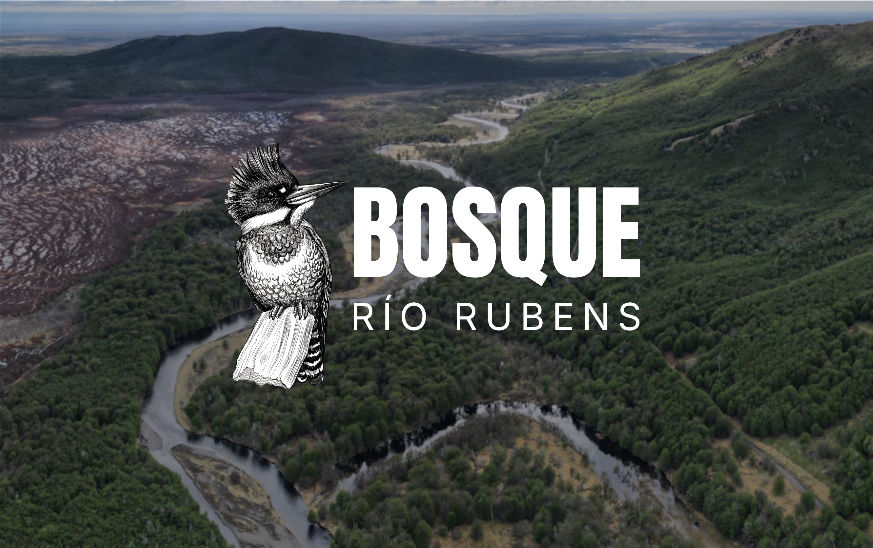
With that conviction, we launched Life in Patagonia with three family projects underway: Bosque Río Rubens , Bosque Cerro and a new development near Puerto Natales that is currently underway. In addition, we are providing consulting services and forming partnerships to attract tourism and regenerative investment to iconic properties like Laguna Sofía , where we are promoting a pioneering model that combines tourism, landscape, and regenerative livestock farming.

This path excites me because it encompasses everything I've experienced: my childhood in rural areas, my work in tourism, my experience in conservation, and the certainty that when activities are organized with purpose, territories thrive.
Conservation needs funding, and the models that incorporate it sustainably are the ones that truly endure. Abandoned, unmanaged territories do not conserve themselves.

Life in Patagonia was born with a clear invitation: to inhabit and develop Patagonia responsibly, integrating people, nature, production and tourism under a single vision: that coexistence is possible, and that doing it well transforms the landscapes and those who inhabit them.
Visit http://www.lifeinpatagonia.com for more information

