

ARCHITECTURE
PRINCIPLES, STYLES AND CRITERIA FOR BUILDING WITHIN LIFE IN PATAGONIA
2 ARCHITECTURAL STYLES
WITH SHARED CRITERIA
Each project develops its own architectural language , but both share common principles that seek to protect the quality of the environment, the views , the coherence of the whole and the value of the territory over time.

UBICACIÓN DEFINIDA
Cada parcela cuenta con una zona destinada al desarrollo y una ubicación recomendada para la vivienda, buscando resguardar vistas, privacidad y una intervención responsable del terreno.

CONCENTRATED INFRASTRUCTURE
The house, barbecue area, cellars, orchards and other facilities must form a coherent whole, avoiding the dispersion of infrastructure within the plot.

PROTECTION OF VIEWS
The landscape is one of the project's main attributes. All construction must respect the views and privacy of the other property owners.

OPEN TERRITORY
The plots retain their open and natural character. Perimeter fences that disrupt the visual and territorial continuity of the project are not permitted.

ENERGÍA Y SUSTENTABILIDAD
The use of renewable energy, low-impact lighting, responsible sanitation systems, and solutions compatible with the Patagonian environment are promoted.

ARCHITECTURAL APPROVAL
All interventions must be reviewed by the Architecture Committee, to safeguard the coherence of the project and the quality of the environment.
The images below are simply for reference, selected to illustrate styles, materials, and architectural criteria compatible with the vision of Life in Patagonia .
.jpeg)

ARCHITECTURE BY CONTRAST
In Bosque Negro, the architecture works by contrast . Contemporary forms, simple geometries , and precise intervention highlight the power of the Patagonian landscape . The result is a modern and understated design where nature and architecture enhance each other without competing.
* Images are for reference only.

THE ORIGIN OF BLACK
The architecture of Bosque Negro draws inspiration from one of the area's most distinctive features: the charred tree trunks and forests that still form part of the landscape. Dark cladding and burnt wood reinterpret these natural elements, creating an architecture deeply connected to the identity of the region .

BURNED WOOD
One of the distinctive elements of Bosque Negro is the use of charred or imitation wood cladding . Inspired by the Japanese Yakisugi (Shou Sugi Ban) technique, this material provides durability, low maintenance , and a sober aesthetic that harmonizes with the forest, the climate, and the project's identity .

ARCHITECTURE BY CONTRAST
The buildings use dark colors and simple forms to highlight the beauty of the surroundings. The contrast allows the forest, the grasslands, and the Patagonian light to be the true protagonists.

PURE VOLUMETRIES
Simple geometries, clean lines, and timeless forms are favored. A restrained architecture that focuses on proportions, materials, and the relationship with the landscape.

HONEST MATERIALS
Burnt wood, steel, concrete, and stone are used simply and authentically. Noble materials, resistant to the Patagonian climate and capable of aging gracefully .

COMMON IDENTITY
The buildings can take on different forms and styles, always within a common architectural identity that brings coherence, value and continuity to the project.
_j.jpg)
ARCHITECTURE THAT ADAPTS
Buildings can explore modern and expressive forms , provided they maintain a coherent relationship with the project's architectural principles . Innovation is welcome when it contributes to identity, quality, and an enhanced experience of living in the area .

NATURAL DURABILITY
The surface carbonization of the wood generates a natural protective layer that improves its resistance to moisture, insects and the passage of time, reducing maintenance needs .

BEAUTY THAT AGES WELL
Unlike other coatings, charred wood evolves naturally over the years, acquiring texture and character without losing its original identity.


ARCHITECTURE THROUGH INTEGRATION
At Bosque Río Rubens, the architecture seeks integration with the landscape . Noble materials , nature-inspired colors, and simple forms allow the buildings to engage in a dialogue with the forest, the river, and the surrounding terrain. The result is a restrained and timeless design, where the architecture complements the environment and becomes a natural extension of the site.
*Images for reference only
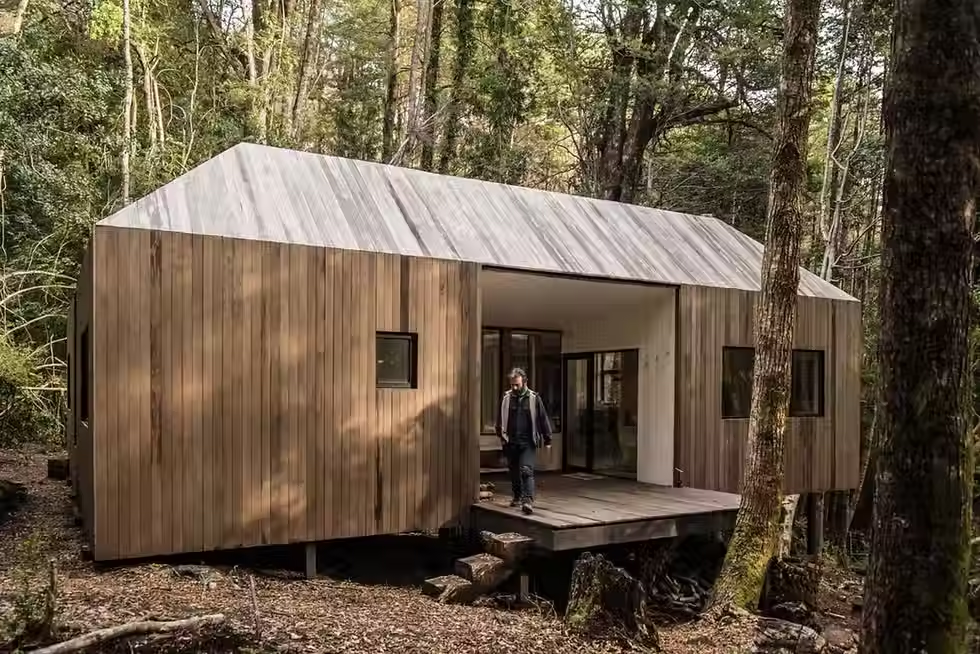
ARCHITECTURE INTEGRATED INTO THE FOREST
The buildings seek to integrate into the existing landscape , taking advantage of the vegetation, topography, and natural clearings. The architecture does not dominate the environment; it is part of it .

NOBLE MATERIAL
Wood, stone, steel, and other natural or low-maintenance materials are an important part of the permitted architectural language within the project .

HUMAN SCALE
Bosque Río Rubens prioritizes buildings of a restrained scale , welcoming and in proportion to the environment. The goal is to create spaces to inhabit nature , not to compete with it.

MINIMAL INTERVENTION
Construction solutions that reduce the impact on the land are valued, avoiding unnecessary earthworks and preserving the natural conditions of the site.

AMONG THE TREES
The houses can be located within wooded areas, taking advantage of the natural protection offered by the site. The design aims to preserve as much existing vegetation as possible .

DESIGNED FOR THE TERRITORY
Architecture designed to connect with the environment , frame views and experience Patagonia from within .

MEANINGFUL INFRASTRUCTURE
Complementary spaces can become central elements of the housing project. Greenhouses, orchards, and cultivation areas are part of the identity of Bosque Río Rubens.

LIVING OUTSIDE
Terraces, hot tubs, fire pits, and open spaces are all part of the Patagonian living experience. Architecture is understood as an extension of the land and outdoor activities.
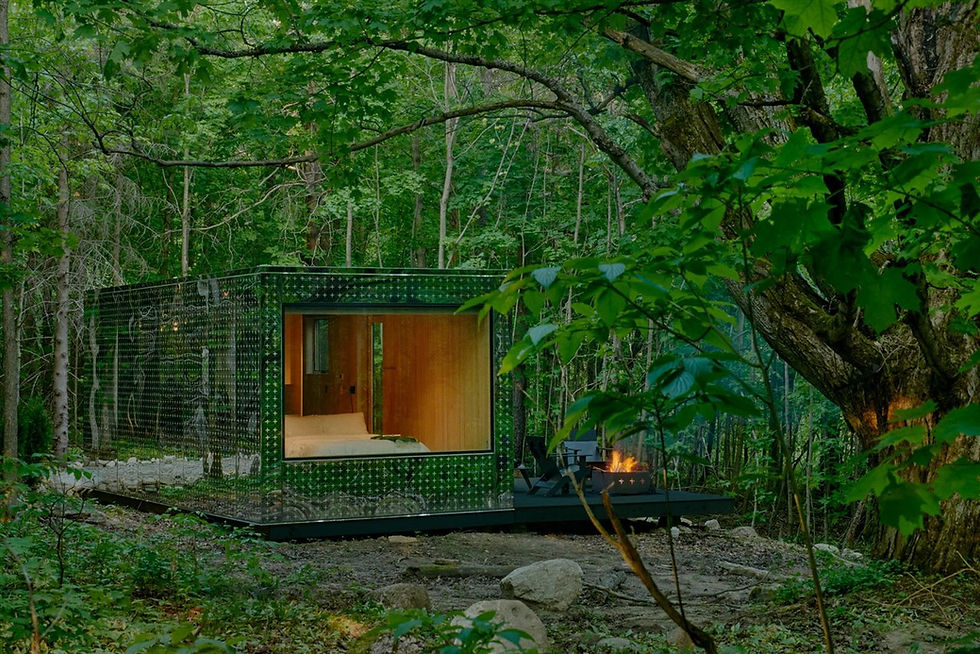
IT BLENDS INTO THE LANDSCAPE
We promote architecture that blends in with nature, reducing its visual impact and allowing the forest to remain the protagonist of the territory.

RESPONSIBLE INNOVATION
Contemporary architecture has a place within the project, as long as it maintains a respectful relationship with the landscape and the general rules of implementation.

NATURAL PRIVACY
The existing vegetation allows for the creation of discreet and sheltered retreats . Each project must consider the privacy of both the owners and their families.

FREEDOM WITH COHERENCE
There is no single mandatory architectural style. Each owner can develop their project within a common framework that protects the overall character of the area .

CHOOSE YOUR PROTECTED PLACE
UNDER A CONSERVATION EASEMENT
Our projects in the Natales commune are territories where architecture, nature and the history of the estate coexist coherently.
Here you don't buy a plot of land: you choose a way of living, within a protected environment, under a conservation model that safeguards the value of the landscape over time.
Principio 1
El paisaje es de todos. La ubitación de las casas esta definida. Ninguna construcción puede alterar las vistas compartidas. Esto nos permite proteger la inversión de los propietarios a largo plazo al mantener el entorno natural y las reglas de desarrollo intactas.
Principle 2
Livestock farming is a fundamental part of the land, and knowing how to coexist harmoniously with the active ranching is both part of the deal and a privilege. You will be informed in advance when the livestock will be passing through.
Principle 3
No fences — no one can fence off your property. The clean, unobstructed landscape is one of the elements that adds the most value to your investment and everyone's experience.
Principle 4
The buildings respond to the environment. Everything is presented to an Architecture Committee with mandatory architectural guidelines that ensure each house is part of the landscape, not an interruption of it.
Territory rules in
Life in Patagonia
Principle 5
Community and aligned values — you don't just buy a piece of land, you enter a network of people who have chosen the same thing as you: to inhabit Patagonia with purpose

Let's talk and learn more about the project
